
TIL: Claude Shannon's six ways to get unstuck

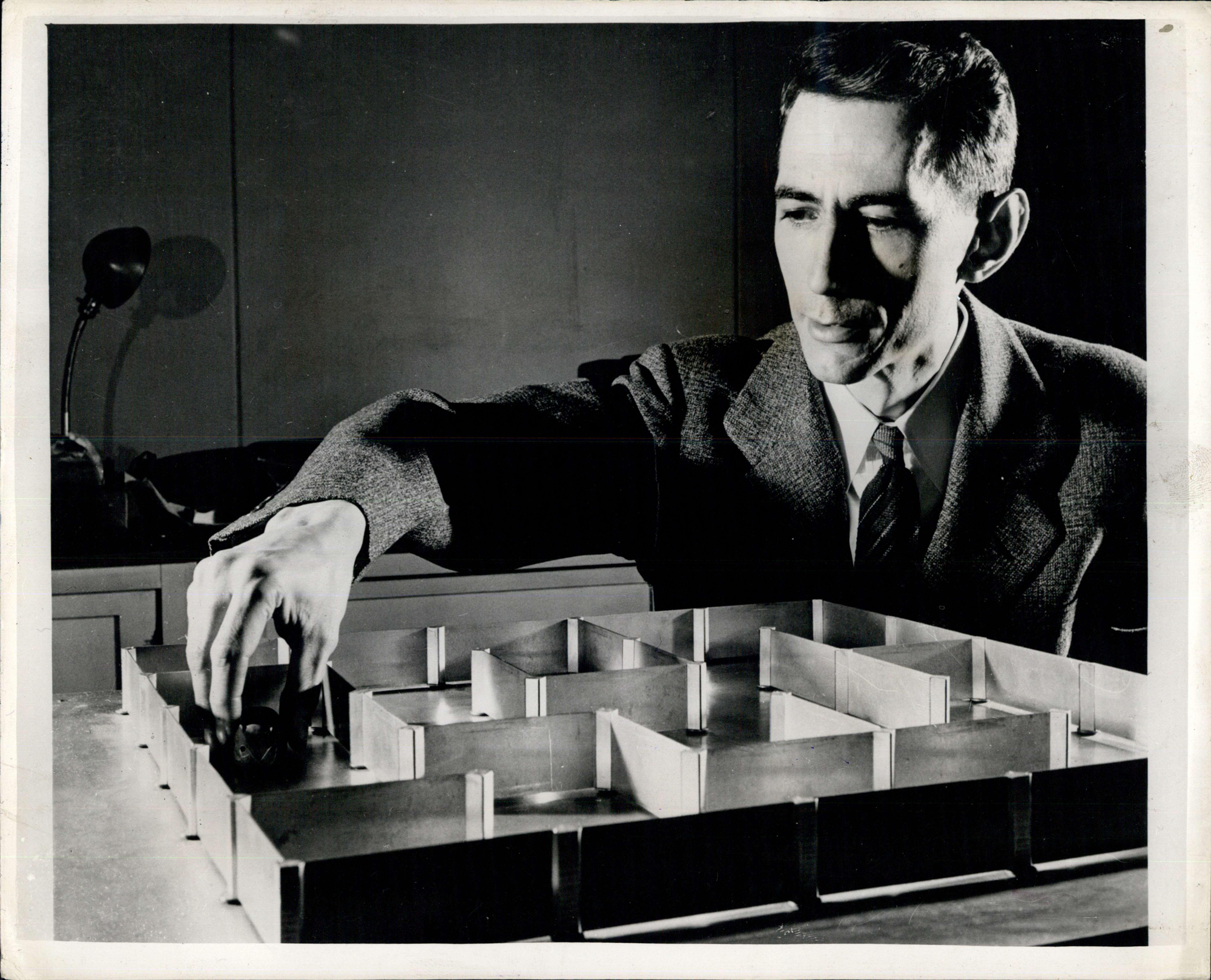
In his 1952 talk on creative thinking, Claude Shannon describes constructive dissatisfaction: seeing something that works and suspecting there’s a simpler or better way to do it.
I like that phrase. It captures a lot of what makes engineering enjoyable. You get something working, notice an awkward part, and start wondering whether it needs to be there.
Shannon puts this alongside curiosity and the pleasure of finding an elegant solution. He then describes six techniques for tackling difficult problems:
- Simplify. Strip away details until you can solve a smaller version. Then add the necessary complexity back.
- Use analogies. Find a similar problem with a known solution. See what you can carry across.
- Reframe. Describe the problem from several viewpoints. Your first formulation might be keeping you stuck.
- Generalise. Once you have a solution, ask where else the same principle could apply.
- Decompose. Break the distance between the problem and its solution into smaller steps you can work through.
- Invert. Start with the desired result and work backwards towards the starting conditions.
Here’s how I’d apply that to an AI system giving poor answers.
Take one failed question. Give the model the correct source passage directly, bypassing retrieval. Can it answer now?
If it can, investigate retrieval and how the context is assembled. If it still struggles, you have a smaller problem to examine: can the model produce the expected answer from this specific evidence?
That one experiment combines simplification, reframing and decomposition. It gives you a concrete place to investigate, and a way to check whether your next change actually helps.
No spam, no sharing to third party. Only you and me.
Member discussion